
Resources
White paper guides
Practical, in-depth guides to help you navigate carbon management.

Why ESOS Should Be More Than Just a Compliance Exercise
Each ESOS phase has added expectations beyond the original measure, audit and identify. Covers the four-year gap problem, building ESOS into everyday decisions, tracking energy every year rather than every four, and connecting it to wider reporting.

Are Businesses Making the Most of Their Energy Assessments?
Government research found ESOS audits made many organisations examine their energy use properly for the first time, but few acted on the recommendations. Covers the conditions that make recommendations stick, how to commission an assessment that will succeed, and how to read the report with a critical eye.

Beyond Compliance: How Businesses Can Get More Value from ESOS
ESOS Phase 4 explained in terms of value rather than compliance: the three dates that matter, where energy waste usually hides, how to make the case to the board, and how an assessment connects to your carbon footprint.

Behind the Numbers: What Carbon Accounting With NCZ Actually Looks Like
A step-by-step walkthrough of what carbon accounting with NCZ actually involves, from the first conversation and setting scope through data capture, calculation, verification and certification, to your reduction plan and the year ahead.

Bring Your Supply Chain With You: A Supplier Engagement Toolkit
Why spend-based Scope 3 estimates make a renewable-powered supplier look identical to one that is not, which questions to ask your suppliers, a template email you can copy and send, and how to follow up so engagement sticks.

From Snapshot to Trajectory: Why Your Second Carbon Footprint Matters Most
A single footprint shows where you started but cannot prove progress. Explains what year-on-year comparison gives you, why the second measurement is easier than the first, and why Q4 is the right time to plan it.

Your Customer Just Asked for Your Carbon Data. Now What?
What sits behind a customer's request for your carbon data, what you are usually being asked for, the common mistakes that undermine a response, and how to answer with confidence — because your own suppliers will be next.
How Long Does It Take to Become Carbon Neutral? A Realistic Timeline
Credible carbon neutrality rests on a sequence — measure accurately, reduce as far as you practically can, then offset the residual — and this guide sets out a realistic timeline for each stage.

How to Empower Employees as Carbon Champions in Your Business
Emissions reduction feels abstract when it lives in a spreadsheet and real when it lives in people. Explains what a network of carbon champions returns — momentum, better data and better ideas — and how to build one.

Carbon Accounting Data: What to Collect, Where to Find It, and How to Keep It Audit-Ready
What to collect for Scope 1, 2 and 3, where to find it in your existing records, and how to keep it audit-ready against the GHG Protocol and ISO 14064 principles of relevance, completeness, consistency, transparency and accuracy.

From Footprint to Action: How to Build Your First Carbon Reduction Plan
How to turn a measured footprint into a documented carbon reduction plan: establishing a credible baseline, identifying your emission hotspots, setting targets that are both ambitious and achievable, and building an action plan with owners and timelines.
NCZ Carbon Accounting Starter Guide: Everything UK Businesses Need to Know About Measuring Emissions
A starter guide to carbon accounting for UK businesses: what it is, measured in tCO2e, the three scopes with Scope 3 often 70-95%, the practical steps of boundaries, activity data, emission factors, calculation and QA, spend versus activity-based data, data challenges, key standards, baseline importance, decarbonisation planning, offsetting and NCZ's four tiers.

Procurement and Supply Chain Carbon Guide
A guide positioning procurement as the decarbonisation lever, since purchased goods and services can exceed 60% of corporate emissions. It covers tiered data collection (spend, activity, supplier-specific), supplier questionnaires, embedding carbon into category management and tenders, supplier segmentation and support, digital tools, capability building, and a four-stage maturity model.
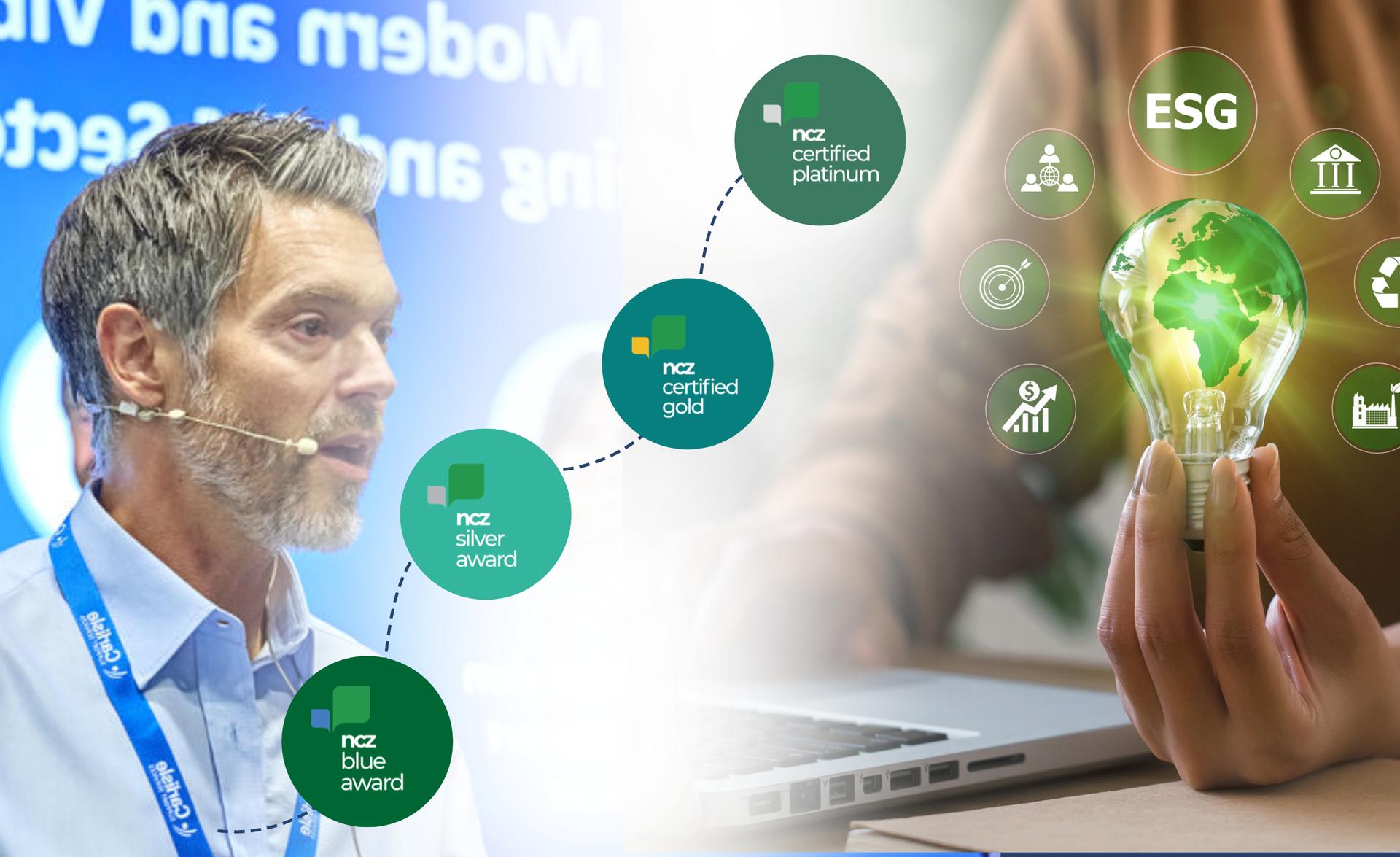
THE NCZ CERTIFICATION FRAMEWORK: Building Credible Pathways to Net Zero
Sets out NCZ's staged certification pathway: Blue (modelled estimate), Silver (self-reported), Gold (specialist-verified ISO 14064 footprint plus a PPN 006 Carbon Reduction Plan) and Platinum (supplier engagement for Scope 3). It also covers optional carbon-neutrality and SBTi-alignment support, the delivery and verification process, and how each level turns carbon management into business value.

Beyond Badges: How NCZ Helps Businesses Strengthen EcoVadis and B Corp Performance
Explains the EcoVadis rating and B Corp certification frameworks and where carbon management fits, noting common shortfalls such as incomplete Scope 3 data, spend-based estimates and no verification. It shows how NCZ's measurement, reduction planning, tiered certification, supplier engagement and transparent reporting strengthen scores across both frameworks.
Carbon Reduction Plan (CRP): A Practical Guide for Organisations
A practical guide to building a credible Carbon Reduction Plan meeting PPN 006 procurement expectations. It covers why CRPs matter commercially and legally, the core components, an accelerated preparation checklist, the compliant-versus-credible distinction, common pitfalls, and how NCZ links CRP requirements to reduction actions and SBTi and ISO 14064 pathways.

Bridging Compliance and Climate Strategy: SBTi and ESOS Explained
Explains how the voluntary SBTi and mandatory ESOS frameworks complement each other, with ESOS energy-audit data informing SBTi target-setting. It details SBTi's purpose, structure and target-setting including the SME route, ESOS requirements, Phase 4 updates and net zero alignment, and how NCZ integrates both into one cohesive framework.

Demystifying Carbon Accounting: The 10 Most Common Questions Businesses Ask
Answers the ten questions UK businesses most commonly ask, from what carbon accounting is and the three scopes to carbon neutral versus net zero, why offsets cannot replace reduction, timelines, UK regulations, setting baselines, common reporting mistakes, how to start a net zero journey and the business case, all mapped to NCZ's certification tiers.

CDP: Disclosure, Risk Management, and Investor Expectations
Explains CDP, the global environmental disclosure system with over 23,000 organisations reporting in 2024, covering its climate, water and forests themes, the business case, the questionnaire and A-to-D scoring, links to climate risk, SBTi and net zero, supply-chain disclosure, how investors and policymakers use the data, common challenges, best practices and NCZ's support.
Carbon Offset Buyer’s Guide
A buyer's guide to high-quality carbon offsets, distinguishing avoidance from removal credits and detailing credibility criteria: additionality, permanence, measurability, verification, no double counting and reputable standards. It covers market red flags, offsetting's place after reduction, how many offsets to buy, project selection, pricing, permissible claims and NCZ's support.
Science Based Targets Initiative (SBTi): The Gold Standard for Corporate Climate Credibility
Explains the SBTi, a partnership of CDP, UNGC, WRI and WWF, as the leading framework for validating 1.5°C-aligned corporate targets. It covers why it matters, the five-step target process, scope emissions, target-setting methods, the Corporate Net Zero Standard (reduce at least 90%, offset no more than 10%), common challenges, benefits and how NCZ supports the journey.

10 Common Carbon Reporting Mistakes and How to Avoid Them
Sets out ten common carbon-reporting mistakes and their fixes: treating reporting as one-off, ignoring Scope 3, uncautious spend-based data, inconsistent boundaries and baselines, outdated conversion factors, confusing offsetting with reduction, double counting, poor documentation, sidelining procurement, and skipping verification, anchored in GHG Protocol, ISO 14064, CDP and SBTi guidance.